

Foundation Certificate in Counselling & Psychotherapy
An introduction to therapeutic practice and personal development. An integrative transpersonal approach
Part-time | January - November 2027
Applications close Nov 2026

The best counsellors and psychotherapists aren't made through theory alone. They're developed through curiosity, reflection, and a willingness to engage with life’s complexity.
Our Foundation Programme is a part-time hybrid introduction to counselling and psychotherapy, combining weekly online teaching with experiential weekends throughout the year. It has been carefully designed for people who want to understand not only how therapy works, but what it truly means to sit alongside another human being through times of difficulty, change and growth.
Grounded in relational, Jungian, humanistic (person-centred and existential), psychodynamic and transpersonal thinking, the programme introduces the ideas that shape psychotherapy while creating space for reflection, exploration and experience. You will begin to develop your capacity to think deeply, listen carefully, remain emotionally present, and understand yourself in relationship with others.
This is a training for people who are curious about becoming excellent therapists.
Watch founder and CEO, Sarah Parry speak a little about the course.
Part-time format
To sit alongside your other commitments

Weekly online seminars
Tuesday evenings 7-9pm
5 in-person weekends
Held in central London
Next online open event
Tuesday 20th October 2026: 7.30pm-9pm
Learn more about our foundation course and what to expect.
A MODERN APPROACH
What are often described as “basic skills” in counselling and psychotherapy are, in reality, highly sophisticated relational capacities that take time, depth, and self-awareness to develop.

While many trainings place theory at the centre, we begin with experience. Students engage deeply with themselves, each other, and the realities of human relationship — theory becomes a way of understanding that experience.
Relationship is the heart of the work.

Overview
The Foundation Programme is a one-year training programme for those wishing to deepen their relational capacities, explore counselling and psychotherapy from an integrative and transpersonal perspective, and/or begin the path toward professional practice.
Our Diploma programme opens Spring 2028 →
Drawing from psychodynamic, humanistic, existential, somatic, and transpersonal traditions — including Jungian thought — the programme offers a strong grounding in theory, skills, and personal development. At its core is a simple but demanding premise: that therapeutic change happens in and through relationship. The quality of presence the therapist brings is therefore as important as what they know.
The training engages the whole person — mind, body, emotion, imagination, and spirit.
This includes the spiritual dimension of human experience, without requiring any particular belief or framework: we do not promote any single ideology or spiritual position, but hold space for the questions of meaning and purpose that often surface in this work.
Psychological suffering and transformation are understood in relation to meaning, relationship, culture, embodiment, and identity. Students are invited into a process that is both intellectually rigorous and personally demanding, requiring honesty, reflection, and a willingness to encounter complexity. The training supports independent thought and respects the individuality of each student, while holding a clear and coherent therapeutic frame.
Who this is for
The programme is suitable for those intending to pursue professional counselling or psychotherapy training, practitioners in helping professions wishing to deepen relational and listening capacities, and individuals seeking substantial personal development within a contained and thoughtful learning environment.
Teaching
Teaching is delivered through a carefully structured hybrid model, combining weekly online seminars with in-person experiential teaching. Learning unfolds through theoretical input, skills practice, group process, and reflective dialogue. The group itself is understood as part of the collective learning environment.
Applicants are expected to demonstrate emotional maturity, resilience, and psychological mindedness, alongside a willingness to engage deeply in both personal and academic work.
Successful completion of the programme requires consistent attendance (minimum 80%), active engagement in experiential learning, completion of written assignments, and full participation at the experiential weekends.
The programme provides a substantial foundation in counselling and psychotherapy and serves as a meaningful step toward further professional clinical training.
Applications close Nov 2026
Structure
The Foundation Programme runs part-time over one year (30 weeks) from January to November 2027. Delivery is a combination of once-weekly evening online lectures, seminars, and workshops, and five experiential in-person weekends.
Evening seminars are delivered online on Tuesdays between 7pm - 9pm, and the weekends in-person from Central London 10am - 5pm.
Term dates 2027
Term 1: 16th January – 21st March
Term 2: 12th April – 12th July
Term 3: 20th September – 7th November
Part-time format
Designed to sit alongside professional, academic, and personal commitments
Weekly online seminars
One Tuesday evening per week from 7-9pm.
30 teaching weeks
Delivered across one calendar year
Three terms
Approximately 10 weeks each
In-person teaching weekends
One at the start of the programme (Saturday), followed by four full in-person experiential weekends held across the academic year.
Two written assignments
Designed to integrate theory, relationship, and self-reflection.
Immersive weekends in London
Our in-person weekends are held in Elephant & Castle, 10am - 5pm each day
Weekend 1 (Saturday only): 16th January (Term 1)
Induction and Entering the Therapeutic Field
Weekend 2: 20th–21st March (Term 1)
Group Dynamics and the Relational Field
Weekend 3: 22nd–23rd May (Term 2)
Experiential Skills Practice
Weekend 4: 9th–10th October (Term 3)
The Adapted Self, Defences and the Shadow
Weekend 5: 6th–7th November (Term 3)
Endings, Integration and Ritual
The Good Mental Health Company
London South Bank University
90 London Rd, Elephant and Castle,
London SE1 6LN
Curriculum
-
(16th January – 21st March 2027)
Weekend 1 (Saturday only 16th January): Induction and Entering the Therapeutic Field
This opening day marks both a practical induction and a psychological threshold into the work. Students are welcomed not simply onto a course, but into a relational field where learning occurs through encounter: with self, with others, and with the unconscious processes that move between us.
We explore the question “what is counselling and psychotherapy?” not as a fixed definition, but as a lived experience. Students begin to understand the central premise of the training: that the therapist is the instrument. Attention is given to presence, emotional availability, and the early formation of the group as a container for learning.
Week 1 (19th January): History of Counselling and Psychotherapy
This week situates students within the rich lineage of psychotherapy, tracing its development from Freud’s psychoanalysis through to contemporary integrative and transpersonal approaches. Particular attention is given to Carl Jung’s expansion of the psyche beyond the personal into symbolic and collective dimensions. Students begin to consider how theory emerges from lived human experience, and how different models reflect different ways of understanding the mind, suffering, and transformation.
Week 2 (26th January): Listening and Attending Skills
Students are introduced to the foundations of therapeutic listening: presence, attention, and the discipline of truly hearing another person. The work begins to turn inward, as students notice their own internal responses — distraction, judgement, anxiety — and begin to understand how these may reflect aspects of their own psyche. Early awareness of Jung’s concept of the Shadow is introduced.
Week 3 (2nd February): Listening and Responding Skills
Building on listening, students explore how to respond in ways that deepen connection rather than close it down. The emphasis is on authenticity and relational sensitivity, rather than technique. Students begin to recognise how their responses are shaped by their own history and unconscious processes.
Week 4 (9th February): Humanistic Therapy I – Carl Rogers
An in-depth exploration of Carl Rogers’ person-centred approach. Students engage with empathy, congruence, and unconditional positive regard, and begin to understand how a psychologically safe relationship allows previously disowned aspects of the self to emerge.
Week 5 (16th February): Humanistic Therapy II – Gestalt and Transactional Analysis
This week introduces Fritz Perls’ Gestalt Therapy and Eric Berne’s Transactional Analysis. Students explore awareness, contact, and relational patterns, including how individuals organise their experience and relate to others, and how aspects of the self may become disowned.
Week 6 (23rd February): Existential Psychotherapy
Drawing on Irvin Yalom, Viktor Frankl, and R.D. Laing, this week engages with meaning, freedom, isolation, and mortality. Students reflect on how avoidance of these realities may shape psychological distress.
Week 7 (2nd March): Presence, Empathy and the Therapist’s Inner World
Students deepen their understanding of the therapist as instrument, exploring how internal experience enters the therapeutic relationship. Projection, transference, and Shadow dynamics are introduced in a grounded, experiential way.
Week 8 (9th March): Relational Psychotherapy
An introduction to Petruska Clarkson’s Five Relationship Model. Students explore the multiple dimensions of therapeutic relating and begin to understand the complexity of relational depth.
Week 9 (16th March): Equality, Diversity and Inclusion
A reflective exploration of identity, power, and difference. Students examine their own assumptions and relational blind spots, including cultural Shadow material.
Weekend 2 (Saturday 20th and Sunday 21st March): Group Dynamics and the Relational Field
This experiential weekend brings the group fully into focus as a living system. Students engage directly with group processes such as projection, transference, belonging, and communication. The group becomes a space where unconscious dynamics — including Shadow material — can be observed and understood in real time.
Week 10 (23rd March): Neurodiversity
An introduction to neurodivergence, including autism, ADHD, dyslexia, and dyspraxia. Students develop a more inclusive and flexible therapeutic perspective.
-
(12th April – 18th July 2027)
Week 11 (13th April): Values and Ethics in Psychotherapy
An introduction to ethical frameworks, including the BACP Ethical Framework. Ethics is explored as a relational practice requiring awareness, integrity, and responsibility.
Week 12 (20th April): Ethical Dilemmas in Practice
Students engage with complex ethical scenarios, developing the capacity to tolerate ambiguity and reflect on competing responsibilities.
Week 13 (27th April): Supervision, Safeguarding and Responsibility
An introduction to supervision as a core aspect of ethical practice. Students explore safeguarding, boundaries, and the importance of reflective oversight.
Week 14 (4th May): Triad Practice – Beginning Clinical Skills
Students begin practising in triads, integrating listening skills, relational awareness, and early clinical thinking.
Week 15 (11th May): Psychodynamic Therapy I – Freud and Klein
An introduction to Sigmund Freud and Melanie Klein. Students explore the unconscious, early development, and internal relational worlds.
Weekend 3 (Saturday 22nd and Sunday 23rd May): Experiential Skills Practice
This weekend marks a significant shift from learning about therapy to actively embodying it. Students engage in extended skills practice, working in depth with relational presence, attunement, and responsiveness.
Feedback is offered not only on technique, but on emotional availability, authenticity, and the capacity to remain present with another person. Students begin to experience what it means to sit in the therapeutic role, encountering both confidence and vulnerability.
Week 16 (18th May): Psychodynamic Therapy II – Winnicott and Bion
Exploration of Donald Winnicott and Wilfred Bion, including holding, containment, and the development of the self within relationship.
Week 17 (25th May): Difficulties in the Therapeutic Relationship
Students explore rupture, resistance, and relational challenge, developing the capacity to remain engaged when therapy becomes difficult.
Week 18 (1st June): Grief and Loss
Drawing on Elisabeth Kübler-Ross, students explore grief, mourning, and emotional processing, learning to remain present with pain.
Week 19 (8th June): The Therapeutic Frame
An in-depth exploration of boundaries, consistency, and containment as the foundation for safe therapeutic work.
Week 20 (15th June): Short-Term and Long-Term Work
Students consider different therapeutic approaches and how timeframes influence depth and relational intensity.
Week 21 (22nd June): Introduction to Transpersonal Thinking and Practice I
A session to develop your thinking about transpersonal theory and practice as it relates to counselling and psychotherapy. We will consider the Five Elements Model during this session.
Week 22 (29th June): Introduction to Transpersonal Thinking and Practice II
Students will develop further understanding of the way we view the transpersonal in the practice of counselling and psychotherapy.
Week 23 (6th July): End of Term Review and Consolidation
A consolidation session to review the course so far. Internal and External meditation techniques will be taught during this session.
-
(20th September – 7th November 2027)
Week 24 (21st September): The Inner Child and Early Experience
An exploration of early developmental experience, vulnerability, and emotional memory.
Week 25 (28th September): Transpersonal Psychotherapy
Introduction to Roberto Assagioli, A.H. Almaas, and Michael Washburn. Students explore development beyond the personal self.
Week 26 (5th October): Jungian Psychology – Archetypes and Individuation
A deeper exploration of Carl Jung’s work, including archetypes, the collective unconscious, and individuation, with particular attention to the integration of the Shadow.
Weekend 4 (Saturday 9th and Sunday 10th October): The Adapted Self, Defences and the Shadow
Positioned at the psychological heart of the training, this weekend offers a deep experiential exploration of how the personality adapts in response to early relational environments.
Students engage directly with Jung’s concept of the Shadow, exploring disowned aspects of the self and the process of integration. This is often experienced as a pivotal moment in the training, where personal insight and professional development meet.
Week 27 (12th October): Attachment Theory
Drawing on John Bowlby and Mary Ainsworth, students explore attachment patterns and their impact on relational life.
Week 28 (19th October): Working with Trauma
An introduction to trauma theory, including Peter Levine and Bessel van der Kolk. Students explore how trauma is held in the body and how therapy can support integration.
Week 29 (26th October): Addiction and Compulsion
An exploration of addiction from psychological and neuroscientific perspectives, including the 12-Step model.
Week 30 (2nd November): Endings, Integration and Reflection
A reflective closing to the academic year, integrating personal and professional learning.
Weekend 5 (Saturday 6th and Sunday 7th November): Endings, Integration and Ritual
A final experiential weekend dedicated to reflection, integration, and closure. Students are invited to acknowledge their journey and bring the learning process to a meaningful and intentional end.
-
Written Assignments
As part of the Foundation Programme, students are required to complete two written assignments designed to support theoretical understanding and personal development.
The assignments reflect the programme’s integrative and transpersonal philosophy, encouraging students to engage intellectually, relationally, and reflexively with the material explored throughout the course.
Assignment One: Theoretical Essay - Introduction to Integrative Psychotherapy Through a Transpersonal Lens
This essay introduces students to key concepts within integrative psychotherapy, with particular emphasis on the therapeutic relationship as the foundation of clinical work.
Drawing on Clarkson’s Five Relationship Model, students will explore the multiple dimensions of therapeutic relating and reflect on how psychodynamic, existential, humanistic, and transpersonal perspectives contribute to an integrative understanding of psychotherapy.
The assignment invites students to think critically about what facilitates healing within therapy and how relationship itself can become a transformative space.
Assignment Two: Reflective Essay - Shadow, Integration, and Personal Development
Drawing on Jungian concepts of the shadow, this reflective essay invites students to explore aspects of themselves that may be disowned, defended against, or difficult to acknowledge. Students will reflect on what they have discovered about themselves through the experiential process of the course, including the challenges, insights, relational dynamics, and areas of personal growth encountered throughout the year.
The essay encourages students to consider what the Jungian term “integration” (becoming the most authentic person you can be in life) might mean in their own lives, and how the learning from the course may shape both their personal development and future therapeutic practice.
Applications close 15th Nov 2026
Your tutors
Your tutors bring decades of clinical experience, a passion for psychotherapy practice, and a belief in healing through human connection.
Guest Lecturers are integral to the delivery of specialist evening lectures and weekend training workshops.

Sarah Parry
CEO | Psychotherapist | Clinical Supervisor | Lecturer
Sarah Parry is the Founder and CEO of The Good Mental Health Company, where she oversees a range of psychotherapy, training and wellbeing services. She is a practising UKCP registered psychotherapist, clinical supervisor and educator with a longstanding interest in human development, personal growth and the factors that enable meaningful change.
-
Before training as a psychotherapist, Sarah worked across the education, public and charitable sectors in leadership, project management, consultancy and teaching roles. She has managed charities, advised organisations through periods of change and founded a personal development organisation. These experiences continue to shape her understanding of individuals, groups and organisations.
Sarah holds a degree in Psychology, a Master’s degree in Health Education and Health Promotion, and a Postgraduate Diploma in Integrative Transpersonal Counselling and Psychotherapy. She is also qualified in clinical supervision and adult education.
Her clinical work draws on psychodynamic, Jungian, humanistic and relational traditions. She is particularly interested in the ways unconscious processes influence relationships, identity, organisations and culture.
Sarah is passionate about psychotherapy training and believes that the wisdom of thinkers such as Freud, Jung, Winnicott, Klein and Yalom remains deeply relevant today. Alongside a team of experienced clinicians, she is committed to creating learning experiences that are intellectually rigorous, personally meaningful and firmly connected to contemporary clinical practice.
Whilst students will learn from a range of experienced tutors, Sarah remains closely involved in the programme and oversees its development, ensuring that the quality of the learning experience reflects the standards and values on which The Good Mental Health Company was founded.
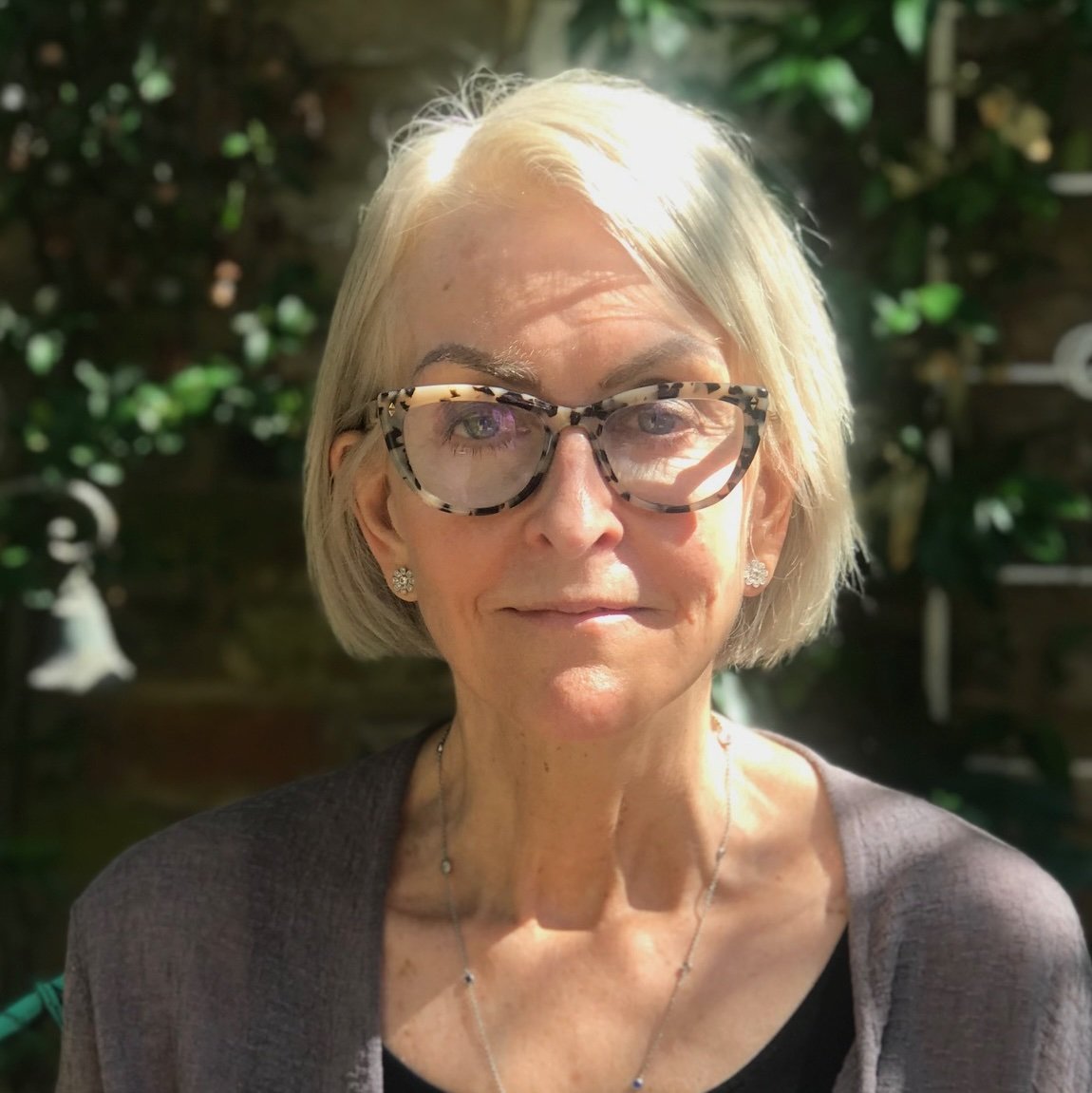
Elena Adams
Psychotherapist | Clinical Supervisor | Director of Professional Standards | Lecturer
Elena Adams is a UKCP-registered psychotherapist, clinical supervisor and educator with extensive experience working with adults, children, young people and families. Alongside her clinical practice, she teaches psychotherapy at both undergraduate and postgraduate level, supporting the development of future practitioners and helping students connect theory with lived experience and clinical practice.
-
Elena trained in systemic psychotherapy and holds a deeply relational view of human experience, understanding individuals within the wider contexts of family, community, culture and society. Her work is also informed by transpersonal perspectives, with an interest in meaning, personal growth and the ways people make sense of themselves and their lives.
Before becoming a psychotherapist, Elena worked for many years in television, communications and event management, running her own production company and leading creative projects across corporate and broadcast settings. These experiences continue to inform her understanding of people, relationships, organisations and the challenges of navigating change.
As a teacher, Elena is known for creating thoughtful and engaging learning environments that encourage curiosity, reflection and dialogue. She is passionate about supporting students to develop both personally and professionally, helping them build confidence, self-awareness and a deeper understanding of the therapeutic relationship.
Alongside her teaching and clinical work, Elena supports a range of charitable and community-based initiatives and is pleased to contribute her experience and expertise to The Good Mental Health Company’s Foundation training programme.

Maria Pierides
Senior Psychotherapist | Clinical Supervisor | Lecturer
Maria Pierides is an HCPC-registered Art Psychotherapist, clinical supervisor and educator, working in both organisational settings and private practice.
-
Originally trained as both an artist and psychotherapist, Maria’s academic and clinical interests lie at the intersection of creativity, symbolism and psychological development. She holds a Postgraduate Diploma in Art Psychotherapy and her work is informed by psychodynamic, psychoanalytic and relational traditions, with a particular focus on the role of imagery, representation and symbolic expression in facilitating psychological insight and emotional transformation.
Maria has a longstanding interest in the contribution of unconscious processes to human experience and relationships. Drawing on object relations and post-Kleinian theory, particularly the work of Wilfred Bion, she is interested in how emotional experience is contained, processed and thought about within therapeutic and supervisory relationships. Her clinical and supervisory practice places particular emphasis on the development of reflective capacity, the use of countertransference as a source of clinical understanding, and the creation of conditions that support psychological growth.
Alongside her clinical work, Maria has extensive experience supporting trainees and early-career practitioners. She is committed to fostering rigorous reflective practice and encouraging students to engage critically with theory whilst remaining attentive to the lived, relational and emotional dimensions of therapeutic work.
Maria brings a thoughtful and integrative approach to teaching, combining psychodynamic scholarship with clinical experience. She is particularly interested in supporting students to develop the capacity to think psychologically, engage with complexity and cultivate a deeper understanding of both themselves and the clients with whom they work.
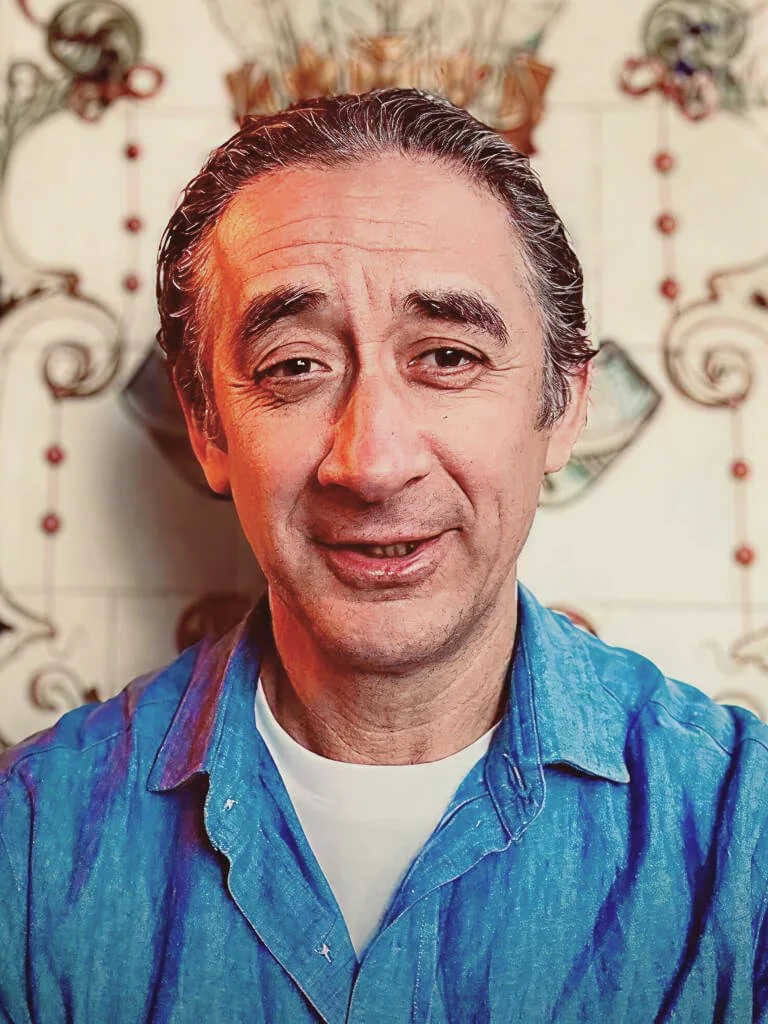
Glenn Delikan
Acupuncturist | Master Martial Artist | Principal Lecturer of Transpersonal Studies
Glenn Delikan brings over four decades of experience exploring the relationship between body, mind, psyche and human development. His multidisciplinary background spans acupuncture, martial arts, movement, bodywork, nutrition, rehabilitation, education and therapeutic practice, providing students with a deeply embodied perspective on psychological wellbeing and personal transformation.
-
As Principal Lecturer of Transpersonal Studies, Glenn introduces students to the transpersonal dimension of psychotherapy, exploring questions of consciousness, meaning, purpose, symbolism, spirituality and the lifelong process of human growth. Drawing on Eastern philosophical traditions alongside contemporary relational, trauma-informed and integrative thinking, he encourages students to understand psychological distress within the wider context of the whole person.
Glenn’s teaching invites students to think beyond diagnosis and symptom reduction, developing the capacity to work with the interconnected physical, emotional, relational and spiritual dimensions of experience. His approach reflects the belief that psychotherapy is concerned not only with relieving suffering, but also with supporting individuals in discovering greater authenticity, resilience and meaning in their lives.
Alongside his teaching, Glenn has extensive clinical experience supporting people experiencing stress, anxiety, chronic pain, fatigue, injury recovery, psychosomatic presentations and emotional overwhelm. His work is collaborative, compassionate and grounded in the understanding that healing involves the integration of body, psyche and soul.
Glenn brings a distinctive transpersonal perspective to the programme, helping students cultivate both clinical depth and an appreciation of the profound mystery and complexity of being human.
Application and interview process
Applications can be made via our application form, which invites you to share your interest in the training, any relevant experience, and your readiness to engage with both the academic and experiential aspects of the course.
Once your application has been received and reviewed, you will be invited to attend an informal interview via Zoom with one of our course tutors. This is an opportunity for us to meet you, hear more about your interest in the training, and for you to get a sense of whether the course feels like the right fit for you.
We are interested not only in prior experience, but in your capacity to reflect, your curiosity about yourself and others, and your willingness to engage within a group learning environment.
Following the interview, successful applicants will be offered a place on the programme.
Applicant Requirements
We welcome applicants from a wide range of backgrounds. Applicants should demonstrate the emotional and relational capacities necessary to engage meaningfully with the training.
Applicants should be able to demonstrate:
Sufficient prior learning and academic capability
Emotional maturity and psychological mindedness
A willingness to engage in self-reflection and personal development
The capacity to participate openly and respectfully within a group learning environment
An ability to tolerate complexity, difference, and emotional challenge
A genuine interest in psychotherapy, human development, and the therapeutic relationship
Commitment to personal psychotherapy or counselling alongside the training. Applicants should be in personal therapy at the start of the course. The foundation course allows for participants to work with trainee therapists for the foundation year
Sufficient life experience, stability, and resilience to undertake experiential therapeutic work
The ability to engage with academic reading, reflective writing, and written assignments at certificate level
A commitment to ethical awareness, personal responsibility, and relational integrity
Fees
Application fee: £75
Course fee: £2950
(including a £300 non-refundable deposit)
To secure your place, the £300 deposit is required within two weeks of an offer being made.
The remaining course fees are payable in advance of the programme start date. Full payment details and timelines will be provided upon acceptance of your place.
Payment plans may be available — please contact us for further information.
Applications close 15th Nov 2026